 Echo Storybooks
A guide for families
For the Child Who Only Wants Dinosaur Facts
Your child can name dinosaurs you have to look up, but a make-believe adventure gets a quick “No thanks.” You can enjoy the facts they love and still leave room for a story.
The short answer
Keep nonfiction as a welcome choice. If you offer fiction, connect it to the same interest and make the invented parts clear. A fact book and a related story can sit together without one replacing the other.
Is it OK if my child only wants fact books?
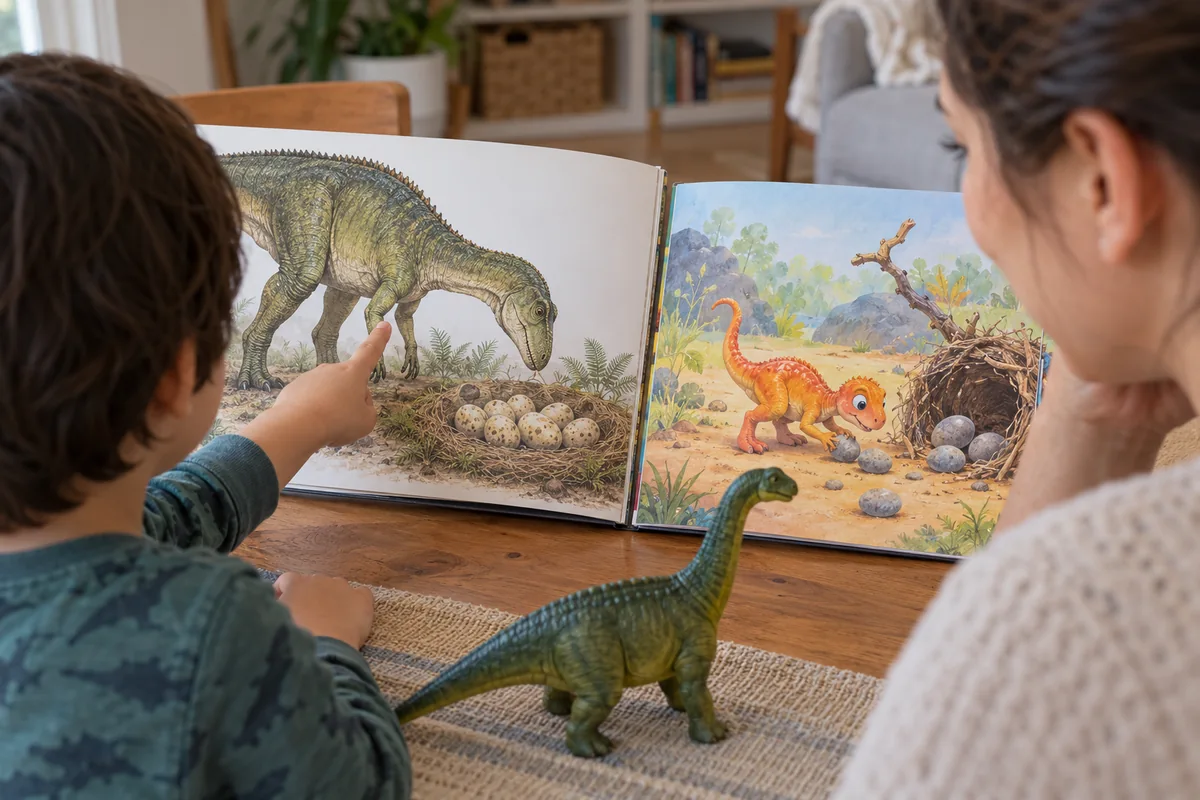
If your child wants to examine the dinosaur page again, start there. Ask which picture they want to show you, or let them tell you about the creature they like. You can share the interest even if you don’t know the names yet.
Nonfiction isn’t a waiting room for storybooks. It can answer a question, show an unfamiliar place, or offer pictures worth lingering over. The book doesn’t have to be read from the first page to the last if your child is looking for one particular subject.
NAEYC distinguishes storybooks, informational books, and mixed-genre books that combine fictional characters with information. Those are different ways to approach a subject. You can offer more than one without suggesting that the fact book is an inferior choice.
Look at what “dinosaur facts” means for your child. They may want the huge creatures, the fossil pictures, the names, or the small details in an illustrated habitat. Those preferences can guide a pairing more precisely than “a dinosaur story.”
Pair a fact book with a story on the same topic
Choose one factual question from the book you already have. Suppose your child keeps returning to pages about eggs or nests. You can use a reliable nonfiction page to explore that question, then offer an invented story with a nest as its setting.
For a homemade example, imagine a tiny dinosaur whose pebble collection keeps rolling out of a crooked nest. The dinosaur tries a leaf basket, asks a friend for help, and eventually moves the collection to a flatter spot. This is a made-up adventure, not an account of dinosaur behavior.
Introduce the connection briefly: “Your book looks at dinosaur nests. This story imagines a dinosaur with a nest problem.” The story doesn’t need to smuggle in a lesson or include every fact your child knows. Its job is to offer an adventure that might appeal.
Other pairings could connect a fact book about buses with an imagined bus that gets lost, or a book about weather with a child trying to protect a picnic from rain. Keep the common subject visible. A random story offered immediately after a favorite fact page may feel like you are changing the topic.
If your child declines, keep reading the nonfiction. You can try the story another day or choose a different connection.
Help your child tell facts from make-believe
A small two-column note can help if your child enjoys comparing. On one side write “From our fact book.” On the other write “Made up for the story.” Add just one detail to each.
For the nest pairing, the first side might contain a nest detail you have checked in the actual nonfiction book. The second might say, “Our dinosaur talks and collects pebbles.” Let the distinction come from the materials you are using; don’t invent a scientific fact to complete the card.
You can also say it aloud without making anything: “The author made the dinosaur talk. We’ll use our fact book for the nest question.” A talking character doesn’t stop a story from being fun. Naming the invention simply keeps the two kinds of book clear.
When you are unsure about a fact, be honest: “I don’t know. Let’s find a source that explains it.” Check the book’s authorship, date, and any suggested resources, or ask a librarian for help. Avoid treating a detailed drawing in a made-up adventure as evidence of what happened in the real world.
This comparison is an optional conversation. You don’t need to fill a chart after every read.
What to do after reading both
After the pairing, leave room for an ordinary activity. Your child might arrange toy dinosaurs around a pretend nest, draw the pebble problem, or return to the factual page to find another creature. Follow the part that caught their attention.
If the subject is something you can observe nearby, try a small real-world connection. After a bus book, watch a bus stop from a safe place with an adult. After a rain story, look through a window at where puddles gather. Keep the activity manageable and check what you actually see rather than forcing it to match the illustration.
For prehistoric animals, pretend play and photographs of museum displays may be more relevant than a backyard comparison. You don’t need to create an elaborate science project to justify sharing a book.
Keep both books available. Your child may ask for the story once and the facts many times, or discover that the story character is worth revisiting. Either response gives you information for the next selection.
The goal of the pairing is to make a friendly introduction. Your child’s dinosaur interest can remain exactly as enthusiastic as it was. You are adding another possible way to spend time with a favorite subject.
How Echo Storybooks fits in
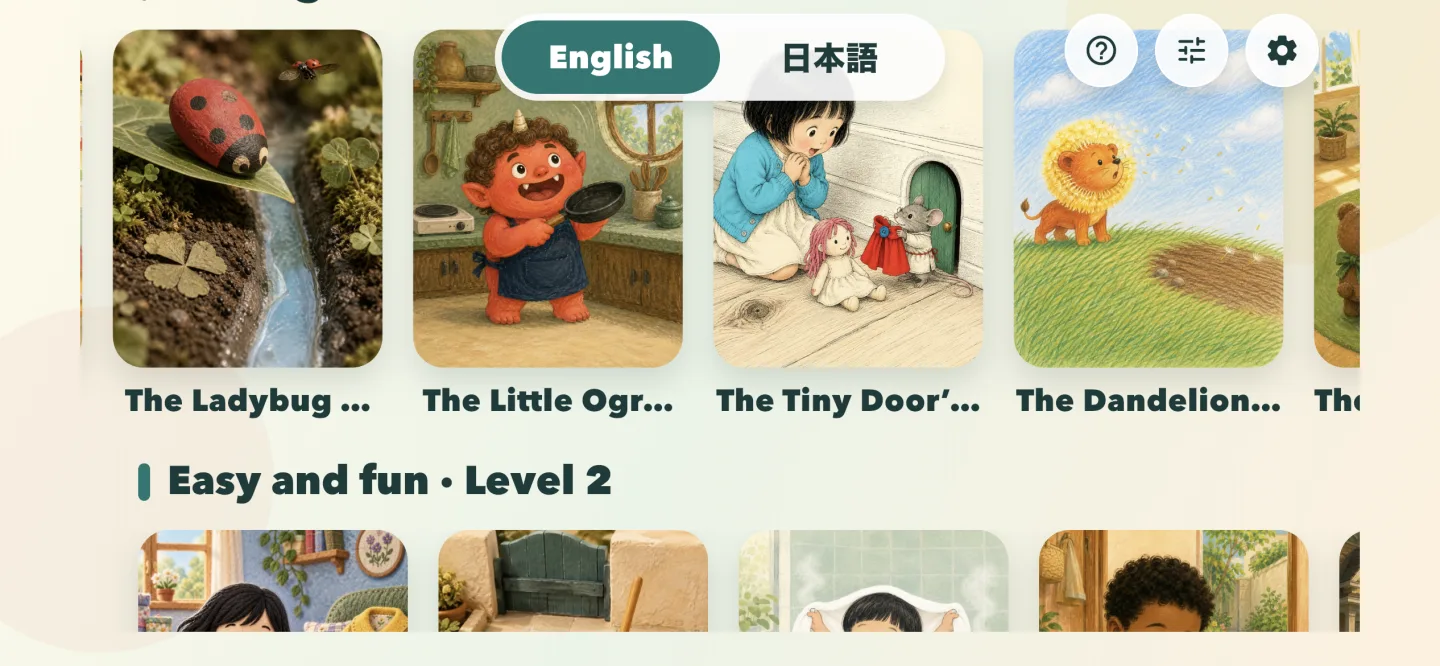
Echo Storybooks is all stories, so it works as the fiction half of a pair: find one about animals or nature and read it next to the fact book.
Quick questions
Is it OK if my child only wants nonfiction?
Yes. Fact books answer questions and are real reading. You don’t need to treat them as a step toward storybooks.
How do I get a fact-loving child interested in stories?
Offer a story on the same subject and name the link: “Your book looks at dinosaur nests. This story imagines a dinosaur with a nest problem.” If they say no, keep reading the facts.
How do I explain what’s real and what’s made up?
Say it plainly: “The author made the dinosaur talk. We’ll use the fact book for the nest question.” If you don’t know a fact, look it up together.
Try it with your child
A story for the fact lover.
100+ original picture books, no ads. Get started free.