 Echo Storybooks
A guide for families
Let Your Child Choose Books at the Library
An entire wall of children’s books can be a lot of choice. Your child may grab the first shiny cover, ask you to choose everything, or get distracted before you reach the shelves.
The short answer
Give the visit a small shape: one child pick, one familiar-interest pick, and one surprise. Preview a few pages together and ask a librarian for help with your child’s specific interests. A borrowed book is something to try, not a commitment to finish.
Make a three-book plan before you go in
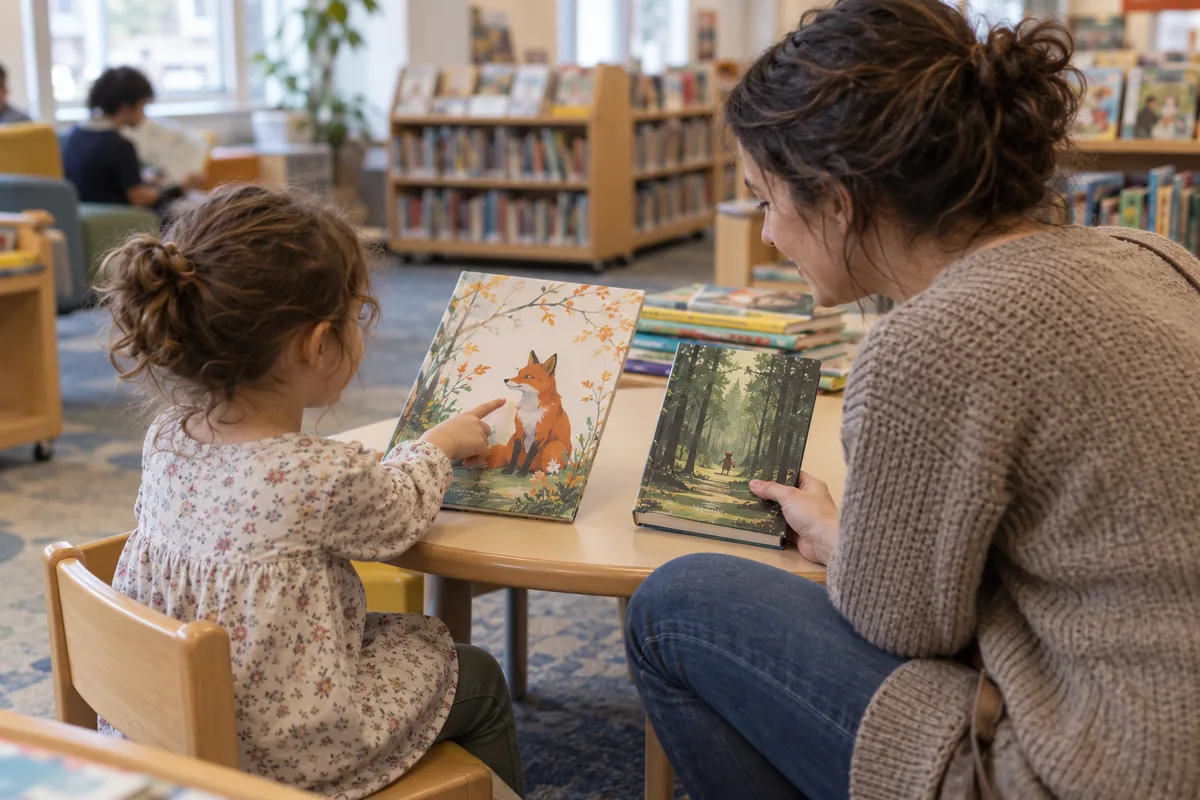
A library trip doesn’t need to produce a perfect stack. Decide what you can comfortably carry, keep track of, and return. Then tell your child the plan in concrete terms: “Today we’re choosing three books. You get one pick, we’ll find one about buses, and we’ll try one surprise.”
The number three is simply a manageable example. Use one book if that makes the trip easier, or more if your family enjoys a bigger pile. The point is to give browsing a beginning and an ending.
Keep the child pick real. Your child may choose a familiar favorite, a cover you find dull, or a book with very little story. If it is suitable to borrow and within the plan, try letting it come home. A selection labeled “your choice” shouldn’t secretly mean “guess which book I wanted.”
Check your library’s borrowing and return information when needed. A simple basket at home can keep library books together. Make the visit fit your household rather than adding a stack that is hard to manage.
Offer two or three books, not the whole shelf
At the shelf, pull out two or three possibilities rather than asking your child to scan the whole section. Set them where you can see the covers. Open one to a picture and another to a page you might read aloud. “Which one would you like to try?” is a more concrete question than “What are you interested in reading?”
For the familiar-interest pick, start with something your child talks about: buses, dogs, cooking, rain, building, or silly mistakes. The subject can lead you to a story, a fact book, or a book of pictures. You don’t need to steer every interest toward the same format.
For the surprise, choose something beyond the usual pile, perhaps a different setting or a kind of family your child hasn’t seen in many books. Reach Out and Read describes choosing engaging, developmentally appropriate books that reflect varied families and communities. At the library, you can look for that variety alongside your child’s familiar interests.
Let the surprise remain a trial. “This one looks different. Let’s see what we think” is enough. Your child doesn’t have to endorse it before you bring it home.
What to ask the librarian
A specific request can get you farther than “What’s good for a four-year-old?” Try: “Our child loves buses, likes funny pictures, and wants a story we can share before dinner. Could you show us a few choices?”
Add details that matter to the reading you want to do. Perhaps you want frequent pictures in a longer story, a gentle adventure without frightening animals, or a sturdy book for a toddler who likes turning pages. You can mention books your child enjoyed and one that didn’t work.
Distinguish the use: “I’ll be reading this aloud” or “This is something she wants to try reading herself.” A book can be enjoyable to hear while needing adult help to read. You aren’t asking the librarian to diagnose ability.
For school practice, take the teacher’s guidance with you. If the assignment calls for a specific type of text, say that clearly. Don’t turn a casual browse into an improvised reading test by asking your child to struggle through random pages in front of the shelf.
If the librarian is busy, write down one interest for the next visit or look for a displayed selection. You don’t need to solve the entire book supply in one afternoon.
When a library book doesn’t work at home
Place the books somewhere they can be noticed, and offer one at a time. You may read a few pages, look at the pictures, or share the whole story. Borrowing gives you room to find out what the cover could not tell you.
A child may love a book at the library and lose interest at home. The plot may be slower than expected, or another favorite may be winning that week. Return it without a lecture: “We tried that one. Next time we’ll look for a different adventure.”
When a book does work, note one useful detail. Was it the repeated joke, the large pictures, the bus route, or the chance to revisit a character? Bring that detail to the next visit. It helps you find another possibility without demanding a duplicate of the favorite.
If your child chooses the same book again, you can borrow it alongside a new trial. Familiarity and discovery can share the basket.
Before the next trip, put the returns by the door and remind your child of the mission. A successful visit can be very ordinary: you returned the books, your child made a real choice, and you brought home something to explore together. The shelves will still be there for the next visit.
How Echo Storybooks fits in
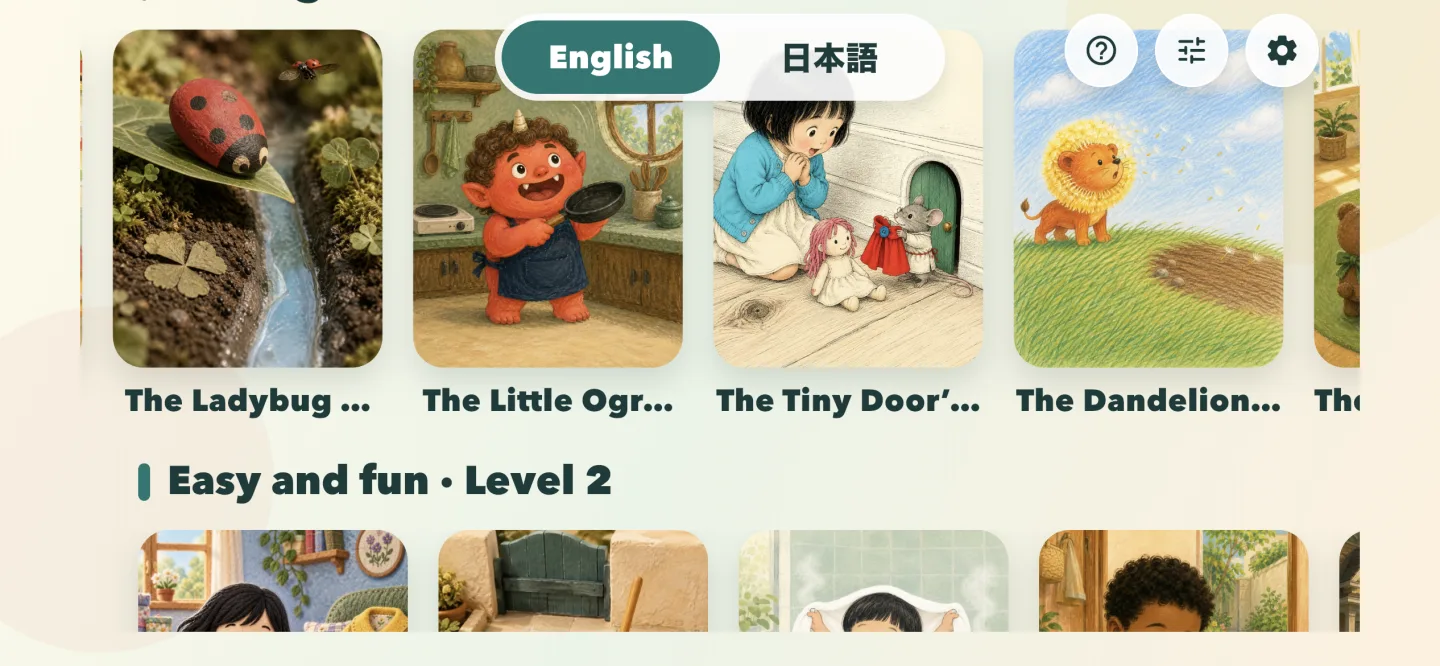
Between library trips, Echo Storybooks gives you a shelf of picture books to try the same way: pick one, listen, and see what your child thinks.
Quick questions
How many library books should a young child choose?
As many as you can comfortably carry and return. Three is an easy start: one your child picks, one about a current interest, and one surprise.
What should I ask a children’s librarian?
Describe your child and the reading you plan to do. For example: loves buses, likes funny pictures, wants a story to share before dinner.
What if my child doesn’t like the book they picked?
Return it without a lecture. A borrowed book is something to try, not a commitment to finish.
Try it with your child
A story ready between library trips.
100+ original picture books, no ads. Get started free.