 Echo Storybooks
A guide for families
When Your Four-Year-Old Wants a Longer Story
“Is that all?” can be a lovely thing to hear at the end of a book. When your four-year-old wants more story, you can add more without making every choice a leap into a long novel.
Look for a longer read-aloud with a clear plot, helpful illustrations, content you have previewed, and a place to stop. Let your child’s interest guide the trial. Page count alone cannot tell you whether a book will be a good fit.
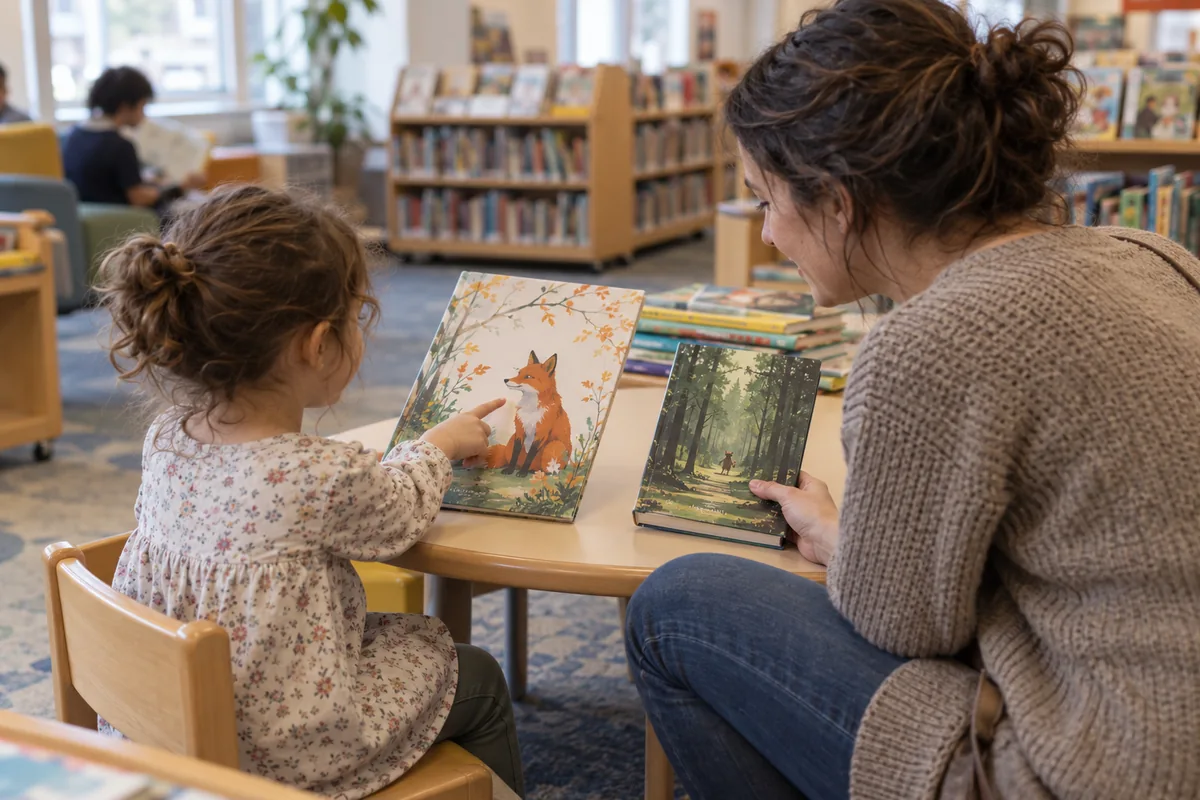
Find out what “more story” means today
More can mean a longer adventure. It can also mean another visit with the same character, more time with you, or a story with more pictures to inspect. Before buying a stack of chapter books, offer a choice: “Would you like another story about this dog, or one adventure that takes us a few nights?”
You might discover that two linked picture books meet the request perfectly. Or your child may be ready to follow an illustrated story across several sittings. Both are useful answers. There is no need to retire picture books just because a longer book has become interesting.
Reach Out and Read describes choosing engaging books that fit children’s development, including richer storylines for ages four and five. At home, the useful question is which of those stories your particular child wants to hear. You can try a richer plot while keeping the illustrations and familiar subjects they enjoy.
Preview the book before promising it
Read enough yourself to understand the beginning, the main trouble, and the ending. A sweet cover can hide a frightening scene. A funny opening may lead to jokes that will need more explaining than you want to do. You are checking whether you want to share this particular story, not whether your child is advanced enough for it.
Use this quick preview card:
- Pictures: Are there illustrations along the way, and can your child return to them?
- Characters: Is it easy to keep track of who wants what?
- Feelings: How intense are the danger, separation, teasing, or sadness?
- Stopping places: Is there a scene or chapter ending where you can close the book?
- Your child’s response: After a trial, do they ask to continue, choose something else, or seem unsure?
A book can pass four of those checks and still be wrong for this week. Keep the receipt or borrow the book if you can. A trial does not commit your family to the ending.
Build a bridge with pictures and small adventures
Between a short picture book and a long novel, there are several possible stops: a longer illustrated picture book, a collection of separate stories about one character, or a short chapter book with frequent pictures. Ask a librarian for that kind of bridge rather than simply asking for books “above preschool level.”
For example, imagine a simple adventure about a child taking a toy boat to a pond. On the first evening, the boat gets caught among the reeds, and the child asks a neighbor for help. You stop after they make a plan. On the second evening, they carry out the plan and bring the boat home. The same goal carries across both evenings, without a large cast or several plots to remember.
A collection can work differently. Tonight’s character loses a sock; tomorrow the same character tries to bake bread. Your child gets a familiar world, but each sitting still has its own ending. That can be a comfortable choice if a cliffhanger feels frustrating.
Keep an easy favorite nearby. Moving between a longer read-aloud and a familiar picture book is allowed.
Make stopping part of the agreement
Before you begin, name a likely stopping point: “We’ll read until the boat reaches the pond.” If the chapter turns out to be longer than expected, choose a reasonable scene break and say what you are doing. Avoid promising the whole book until you know what “the whole book” will involve.
When you return, give a tiny reminder yourself: “The boat was stuck, and they were getting a long stick.” Your child can add something if they want to. You do not need a recap quiz before the next page.
If your child dislikes stopping in the middle, try an episode collection or a complete picture book instead. If they love continuing, set aside the next part for a time you can comfortably read it. More interest does not require an unlimited evening.
You can also abandon a book. “This one has a lot of characters. Let’s save it and choose another adventure” is an honest explanation. It does not turn the choice into a judgment about your child.
At the end of a few trials, keep what you learned: frequent pictures helped, a lonely character felt too sad, or a separate little adventure worked better than a cliffhanger. Those details are more useful for the next library visit than the number of pages your four-year-old has heard.