 Echo Storybooks
A guide for families
An Autumn Story Walk: Notice One Thing, Then Tell a Tiny Tale
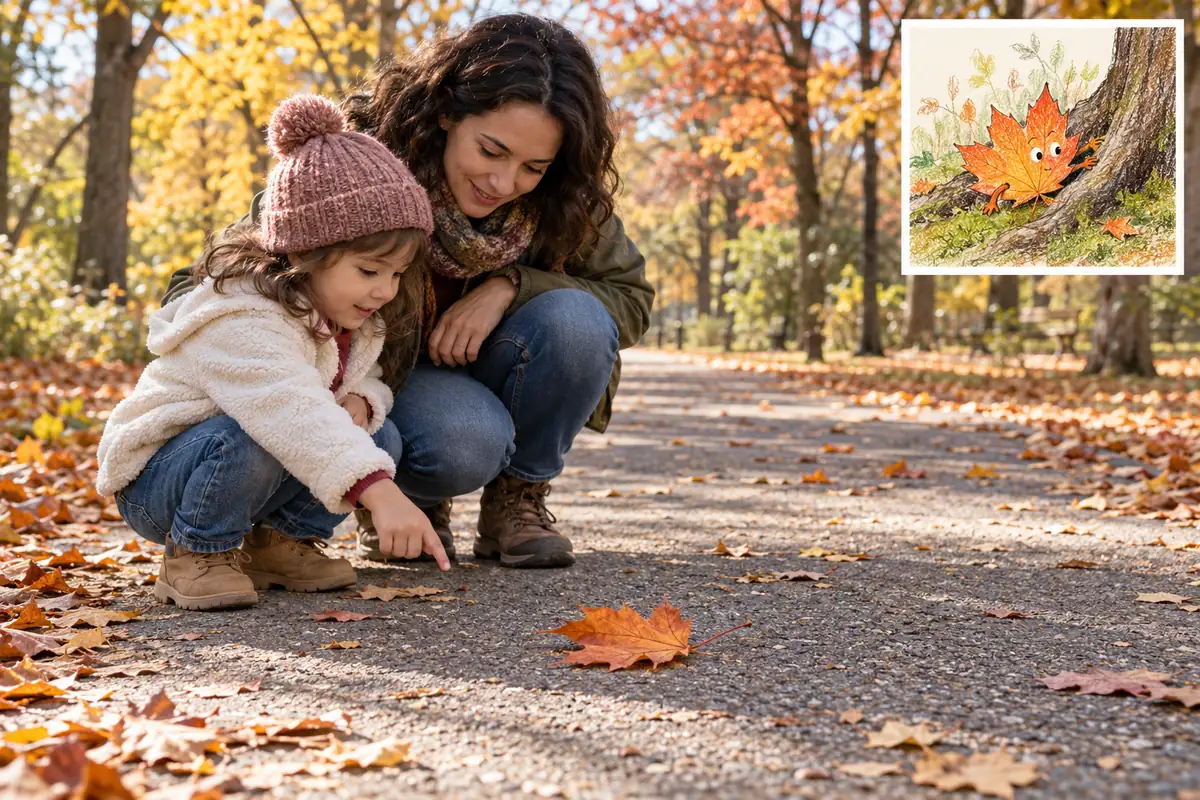
A leaf skitters along the path and stops beside your shoe. That can be the whole starting point for a fall story activity. You do not need a bag of collected leaves or a craft waiting at home.
Notice one real detail, then clearly switch to an invented story about it. Ask who the character is, what they want, and one thing that happens. An accessible path, porch, or window can all work; collecting objects, making a worksheet, and reading another book afterward are optional.
Choose a place that makes looking easy
Pick a short familiar route or a place where you can pause comfortably with your child. It might be a neighborhood path, a park area you are allowed to use, or the view from home. Staying in one spot is enough.
Check the weather and local access conditions before going outside. Stay with your child and follow the rules of the place you visit. This activity does not require picking plants, entering a garden, handling wildlife, or tasting anything you find.
NAEYC’s nature-walk guidance suggests noticing details of the outdoors and weather, including from a look or step outside. You can use that invitation at whatever distance is practical for your family.
There is no need to find a postcard version of autumn. If your area has green leaves, rain, warm weather, or very little visible seasonal change, notice what is actually there. A moving shadow or a puddle can start a story as readily as an orange leaf.
Say what you noticed before inventing anything
Begin with one plain observation: “The wind moved that leaf,” or “That puddle is beside the path.” Let your child point out a detail too. They might notice something you were not planning to use.
Then mark the switch: “Shall we make up a story about it?” An original fictional line could be, “A leaf was looking for a quiet place to land.” Wanting a quiet place belongs to the pretend story; the movement on the path was what you observed.
If your child asks a factual question, answer that as a separate question. “Why did the leaf fall?” may need information you do not have yet. You can say, “I’m not sure about that leaf. We can look it up. Our leaf character is something we’re inventing.”
Do not ask the child to classify every sentence as real or pretend. A brief signpost when you begin the tale is enough for the activity. You can return to the distinction when a genuine question makes it useful.
Use three prompts and stop there
Offer only the pieces you need for a tiny tale. Your child can supply one, several, or none; you can tell a version yourself.
- Who is it? A leaf, a puddle, a shadow, or a character your child invents.
- What do they want? A quiet landing place, a friend, or a way to reach a spot across the path.
- What happens? One small event that changes the situation.
For example: “A leaf wanted a quiet place to land. A gust pushed it toward a puddle, but it came to rest beside a tree root.” This is an original invented tale, not a claim that leaves make decisions.
Your child might prefer a sillier version: the puddle offers the leaf a swimming lesson. Name that as pretend too and enjoy it. The activity does not need a realistic ending.
NAEYC also suggests inventing a story from footprints noticed outdoors. That is another possible starting detail when leaves are not the interesting thing on your route. You do not need to identify the maker before imagining a fictional character.
Bring the idea home only if you want it
The story can end on the path. You do not have to collect its character, take a photograph, or recreate the scene. A leaf can stay where it landed while your family continues the walk.
If your child wants more, tell the line again on the way home. You could draw a single picture later or let them dictate a sentence, but do not turn the invitation into a required craft. Sometimes looking and talking were the activity.
At a window, follow the same sequence. Notice a branch moving, then imagine an original branch character trying to wave hello. From a porch, notice where a shadow reaches and invent a shadow looking for a place to rest. Keep factual weather or plant explanations separate from the fictional motives.
A picture book afterward is an option, not the final step you must complete. Choose a book you have actually previewed and see whether its scene connects to the child’s interest. If they are done with stories, leave the book for later.
Next time, begin with a new detail rather than a longer plan. One thing you noticed and one small invention can be enough for a shared autumn story, wherever autumn is happening around you.