Low-pressure ways to join in with a story—without turning story time into a test.
By the Echo Storybooks product team · Updated September 27, 2026
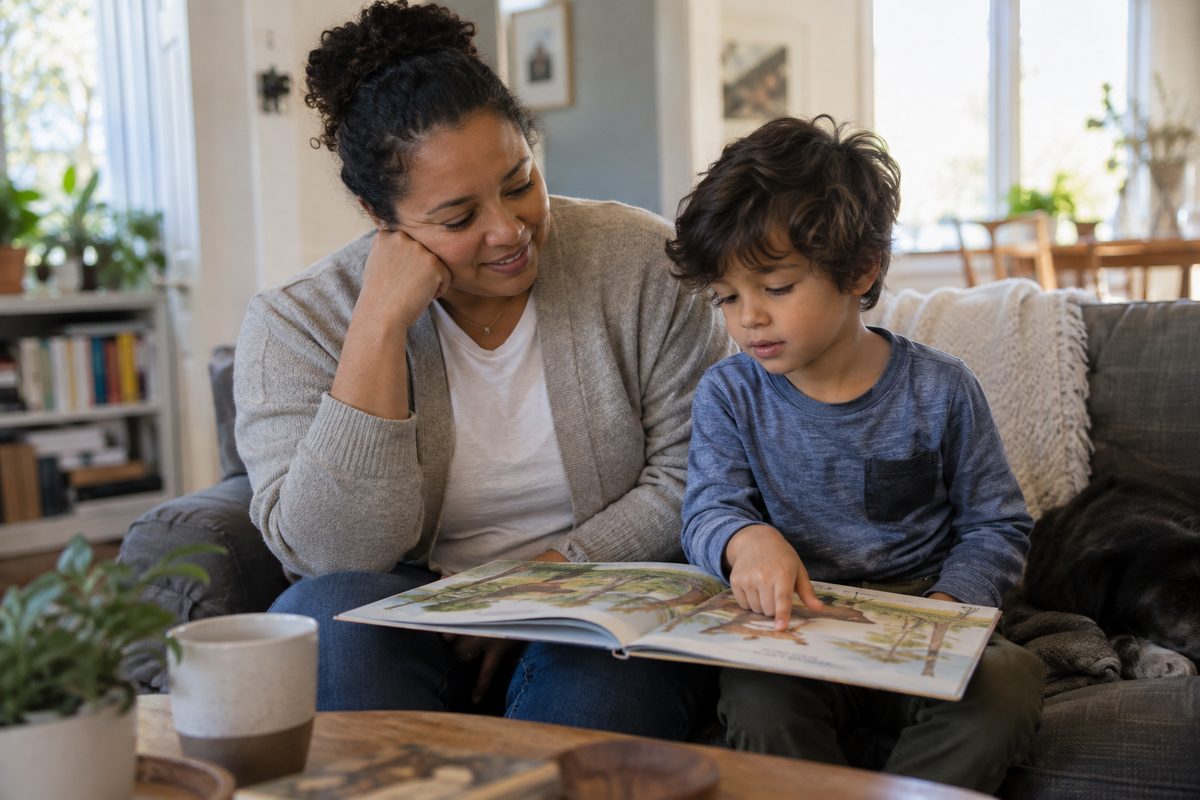
Pointing, listening, and talking about a picture all count as joining in.
Read together without asking your child to take a turn.
Your child might be tired, unsure of the words, or simply not in the mood. Read the page yourself and let your child join in with one word, point to a picture, or just listen.
It helps to separate taking part in a story from reading words independently. A child can understand and enjoy what is happening without being ready—or wanting—to read every line aloud.
A short story sample: listen first, then choose
Start by watching or listening together. Your child can respond if they want to, but there is no need to ask for a performance.
A short clip from Button Trail in English The words light up as the story is read aloud.
English transcript
Crow carried a pouch full of buttons.
One rolled out through a tiny hole.
More buttons dotted the path behind him.
Try: “What rolled out?” A child can answer “button,” point to it, or simply keep listening. If there is no response, continue the story without repeating the question.
A few things to notice can change from one day to the next:
InterestIs this book about something your child cares about?
DifficultyDoes the text feel too hard, long, or unfamiliar right now?
EnergyWould a shorter moment work better when your child is less tired?
Confidence or contextDoes reading feel like a performance, or is the setting noisy, rushed, or uncomfortable?
These are useful questions to bring to a teacher; Understood’s overview is one source.
Start with one word—or just listen.
Offer a choice instead of a demand: “Would you like to listen, point, repeat one part, or tell me what you notice?”
Listen to one page together, then pause.
Point to a picture or make a sound effect.
Repeat one predictable word or phrase.
Tell the idea in your own words, in any language that feels comfortable.
If your child does not respond, keep reading warmly yourself. Staying nearby or choosing the next page can be enough for that moment.
Make the book fit the child
Try a slightly easier text, a topic your child already loves, or a short stopping point. Re-reading a favorite is allowed to be enjoyment—not drilling. You can also share the work:
Read one page; let your child join a predictable line.
Read together briefly, or alternate who turns the page.
Invite a stuffed animal, sibling, or familiar family listener.
Skip recording or public performance if an audience adds pressure.
Adult: “One rolled out through a tiny hole.”
Child: “Button!” — or a point, sound, or smile.
When to ask for help
If read-aloud refusal keeps happening, or you notice broader concerns around reading, understanding, hearing, vision, language, or school participation, share what you are seeing with your child’s teacher. A teacher can help you decide what to try next. This page is not a diagnosis.
A few quick questions
Is it okay if my child only listens?
Yes. Listening is a real way to share a story. Leave speaking open as an invitation, not a requirement.
Should I correct every word?
Keep the moment connected. If correction makes your child pull back, simply model the line and return to the story. Save detailed correction for another time, or ask your child’s teacher what they recommend.
What if my child says no to every option?
Pause and try another time. Protecting the relationship with stories matters more than finishing one page.
A story can begin with listening
See how Echo Storybooks works.
Echo Storybooks is a picture book app for kids ages 0–6, with 100+ original stories, narration with words that light up, optional read-aloud practice, and one picture question after each story. A child can listen, answer the picture question, and choose whether to participate by speaking.
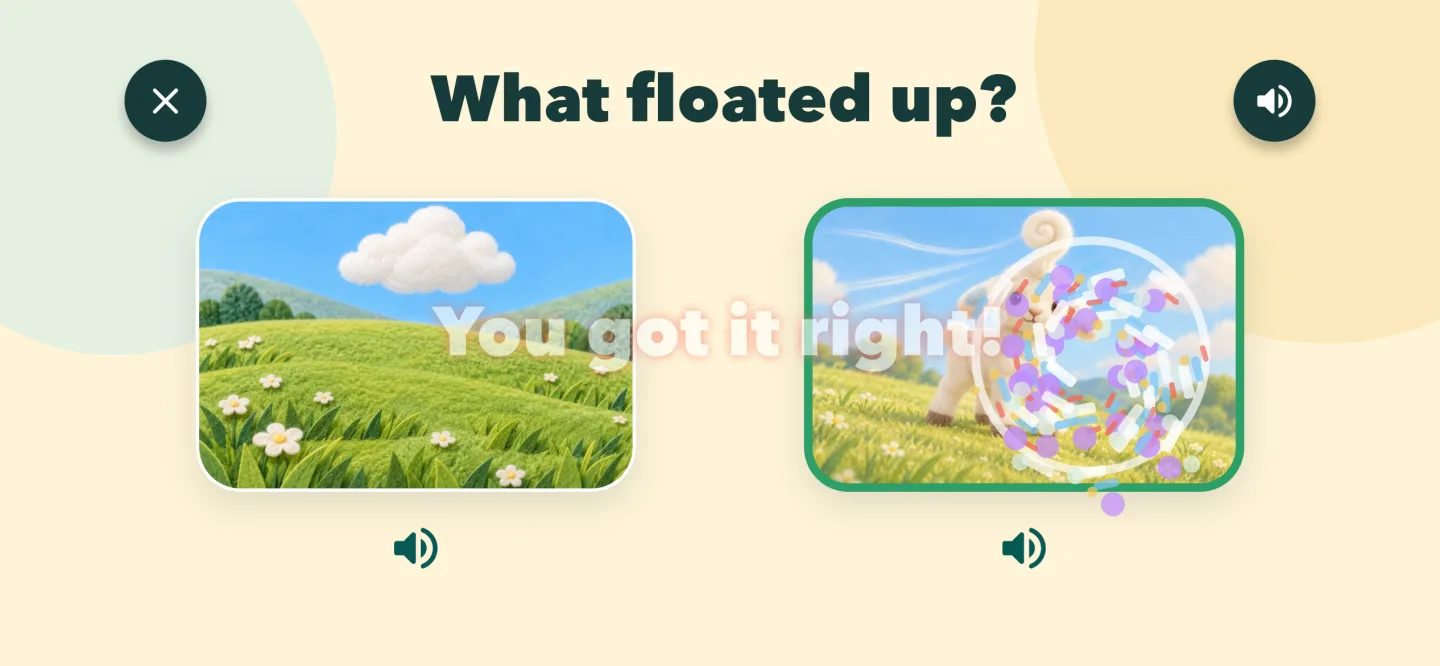
An actual picture-based story question in the app. It is part of the story flow, not an assessment.
Choose 2 books to keep free forever. No ads, and no account required. Listening works without microphone access. The app does not retain voice recordings or send recordings or recognized text to its servers; platform speech recognition may process data according to your device settings. See our Privacy page for details.
It is a story experience—not live conversation with a person or a treatment or diagnostic tool. Speaking is always optional.
 Echo Storybooks