 Echo Storybooks
A guide for families
Storytime With a Toddler and a School-Age Child
One child wants to turn the page. The other wants to hear every word. Reading to two ages at once can feel like trying to keep two very different appointments.
The short answer
Try a book with something each child can enjoy, and offer different optional ways to join. Keep the adult in charge of reading and supervision. A brief shared story plus separate turns can work better than asking both children to stay for everything.

Pick a book both children can enjoy
The shared book doesn’t have to meet every reading interest in the family. It only needs one useful meeting place: a funny animal, a big picture, a repeated sound, or a familiar everyday problem. The toddler may like finding the cat while the older child follows why the cat keeps disappearing.
Look at a few pages before choosing. Can the younger child enjoy the pictures without waiting through long blocks of text? Is there something the older child genuinely likes, rather than a book they are expected to tolerate because they are older?
NAEYC’s guidance allows young children to move, investigate, and engage with part of a book. You can use that flexibility at home without asking an older sibling to share the toddler’s exact way of listening.
Sometimes the overlap is small. One funny page together may be enough before each child gets a different story. You don’t need to call the entire evening a family read-aloud for it to include a shared moment.
Give each child a small way to join in
Try this small arrangement: the younger child can choose a picture to notice; the older child can choose a character to follow; the caregiver reads. You might say, “You can show me your favorite picture. You can tell me which character you want to watch. I’ll do the words.” Neither child has to accept a role.
Be specific about physical turns. If both children want to turn pages, alternate a few turns or let the adult hold the book. A young child’s eagerness can be welcome while a fragile library page still needs protection.
Give the older child an occasional direct response. If they ask why a character hid the key, finish the toddler’s brief comment and come back: “You were asking about the key. I think she wanted to keep it safe.” Otherwise, the older child may spend the whole reading waiting for a conversation that never reaches them.
Keep optional roles small. Finding every red object, remembering all the names, and explaining the plot to a sibling can turn a story into a list of duties. The older child is a listener, not the assistant teacher. They shouldn’t be responsible for holding the toddler, correcting them, or keeping them entertained while you read.
When the younger child loses interest first
Set up a safe nearby alternative for the younger child before opening the book. A familiar soft toy or a sturdy board book within your view may be enough. Choose something suitable for that child and continue supervising them; finishing their part of storytime doesn’t mean leaving them on their own.
When the younger child loses interest, name the change plainly: “You can look at your little book here. I’m reading the rest of this page with your sister.” You can stop the read-aloud if supervision needs your full attention. Safety takes priority over reaching the ending.
The older child can leave too. If they want a longer story later, mark a place and make a realistic plan. Don’t require them to stay through the toddler’s favorite just because you hoped for one activity everyone would finish together.
If interruptions keep making the book impossible to follow, try a shorter shared book next time. Keep the longer adventure for a separate turn. This changes the logistics rather than assigning blame to the younger child.
Make time for one story each
A simple evening might look like this: one shared picture book after dinner, a short toddler favorite while the older child does a nearby activity, and part of the older child’s adventure later when another adult can supervise the toddler or the toddler is settled for the night. Adjust the order to your household.
If you are the only adult, separate turns can still happen with both children nearby. “I’m reading your brother’s book first, then yours” makes the promise visible. Keep both turns modest enough that you can follow through.
You can alternate who chooses the shared book on different days. Separately chosen books don’t need to have matching page counts. Fairness can mean that each child’s interest gets a real place, even when the reading looks different.
On a crowded night, choose individual moments instead of forcing a group session: a few pictures with the toddler and a page with the older child. Another day may have more room for everyone.
Watch what keeps getting squeezed out. If the older child’s story is always postponed, protect their turn earlier. If the toddler spends every read hearing “wait,” choose a shared book with quicker entry points. The useful routine is the one where both children sometimes get to enjoy the story, and you can actually read it.
How Echo Storybooks fits in
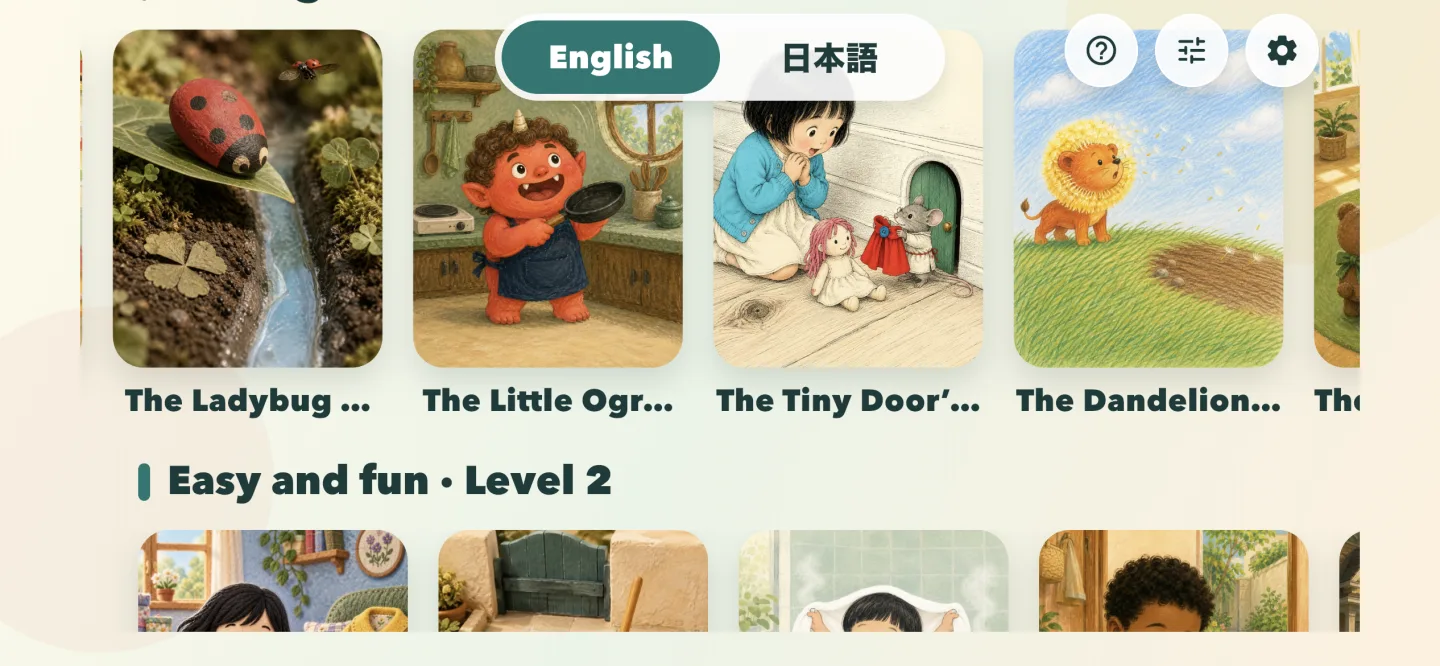
With Echo Storybooks, each child can pick a story at their own level and take a turn, while you stay in charge of the device.
Quick questions
How do I read to a toddler and an older child at the same time?
Choose a book with something for each (big pictures for one, a character to follow for the other) and let them join in different ways. You do the reading.
What if the toddler wanders off?
Let them. Set up a safe spot nearby with a board book or soft toy, and finish the page with the older child.
Should siblings always share storytime?
No. A short shared book plus one story each often works better than asking both to sit through everything.
Try it with your child
A story for each of them.
100+ original picture books, no ads. Get started free.