The short answer
Split the job: let narration model the English, and bring the conversation yourself—in whatever language you speak most comfortably. Your child benefits from hearing clear English and from talking with you about the story.
 Echo Storybooks
A guide for families
Many parents worry that their accent or grammar isn’t good enough to read English stories aloud. You don’t need perfect English to make story time work.

Split the job: let narration model the English, and bring the conversation yourself—in whatever language you speak most comfortably. Your child benefits from hearing clear English and from talking with you about the story.
The British Council’s guide for parents also encourages using picture books at home, even when English isn’t the family’s first language (LearnEnglish Kids).
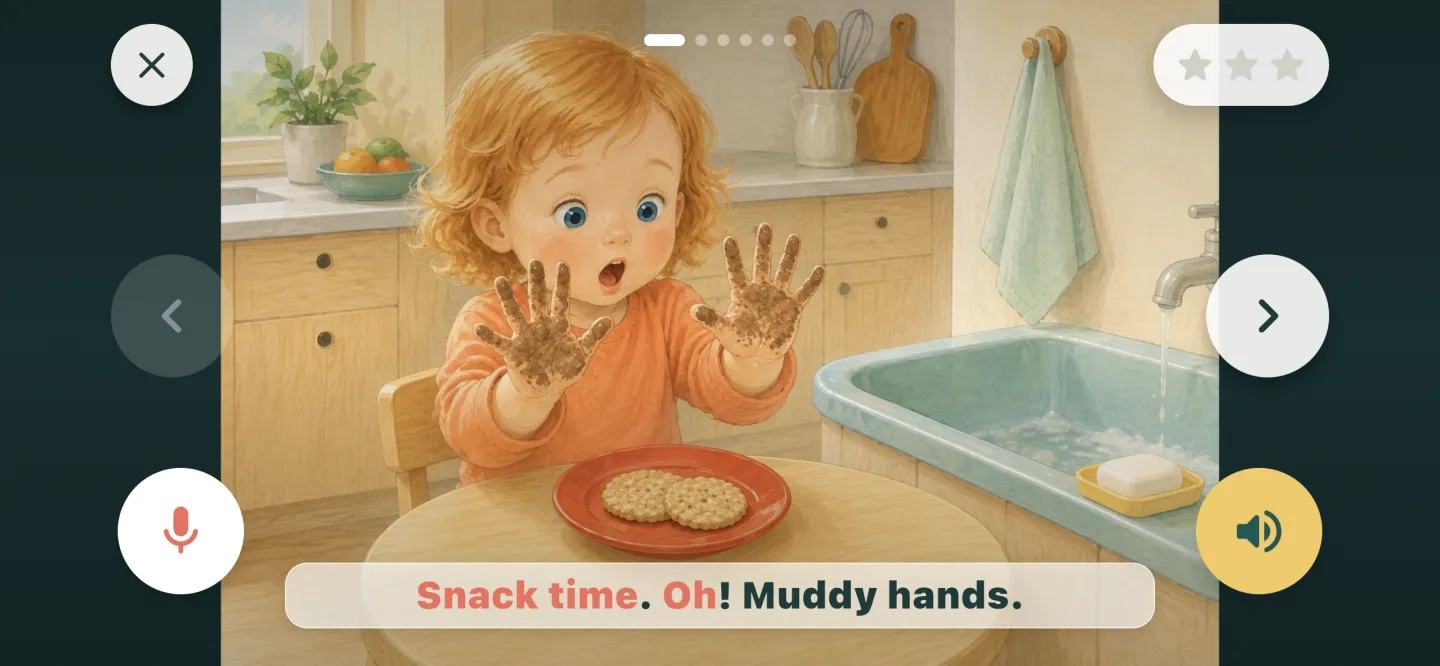
Children hear many voices and accents. Pairing your conversation with clear narration gives them a model, while your warmth keeps them engaged.
Use whichever keeps the conversation flowing. Talking about the story matters more than the language you use to do it.
Look it up together or guess from the picture. It is a great chance to show your child how to learn.
Try it with your child
100+ original picture books, no ads, and 2 books you can keep free forever.