 Echo Storybooks
A guide for families
Silly Rhyming Games to Play After a Story
The book is finished, but your child is still giggling about the fox. Keep that little bit of fun going with a rhyme. You only need a word, a ridiculous idea, and someone willing to be silly.
The short answer
Pick a word with an easy rhyme, such as cat and hat. Make up one silly line together, accept invented words, and stop whenever the game loses its appeal. You can supply all the rhymes.
Listen for the ending sound
Rhyming words sound alike at the end: cat and hat, boat and goat, bear and chair. They don’t have to look alike on the page. Say the words out loud before using them in a game; love and move look like a pair, but they don’t rhyme.
NAEYC’s guide to playful sound activities describes rhyming as noticing similar ending sounds and suggests weaving wordplay into familiar activities. For home storytime, start with a word your child finds funny.
Choose something your child remembers from the story, such as a cat, a cake, or a boat. You don’t need a rhyming book. A story about a lost mitten can become a game about a kitten if that’s the first pair that comes to mind.
Say the pair yourself: “A cat in a hat. That sounds funny.” Your child can laugh, repeat it, add something, or keep looking at the picture. You can take the next turn too.
Game one: What did the fox pack?
Imagine a fox packing a box for a trip. Start with socks. Then make the packing list increasingly unreasonable: “The fox packed socks, three rocks, and two enormous clocks.” You can mime trying to squeeze the clocks inside.
Invite your child to offer something for the box. If they say “pizza,” keep the pizza. You could add, “Pizza too! This fox will need a bigger box.” The story doesn’t collapse because one item doesn’t rhyme.
If your child wants the matching sounds to continue, offer a choice you can act out: “Should the fox pack more socks or a heavy rock?” Lift the imaginary rock together. Then close the box and give the fox a destination.
This can be a three-line game. It can also become a long packing disaster, if everyone is enjoying it. Let the packing get as ridiculous as you like.
Game two: Find a hat for the cat
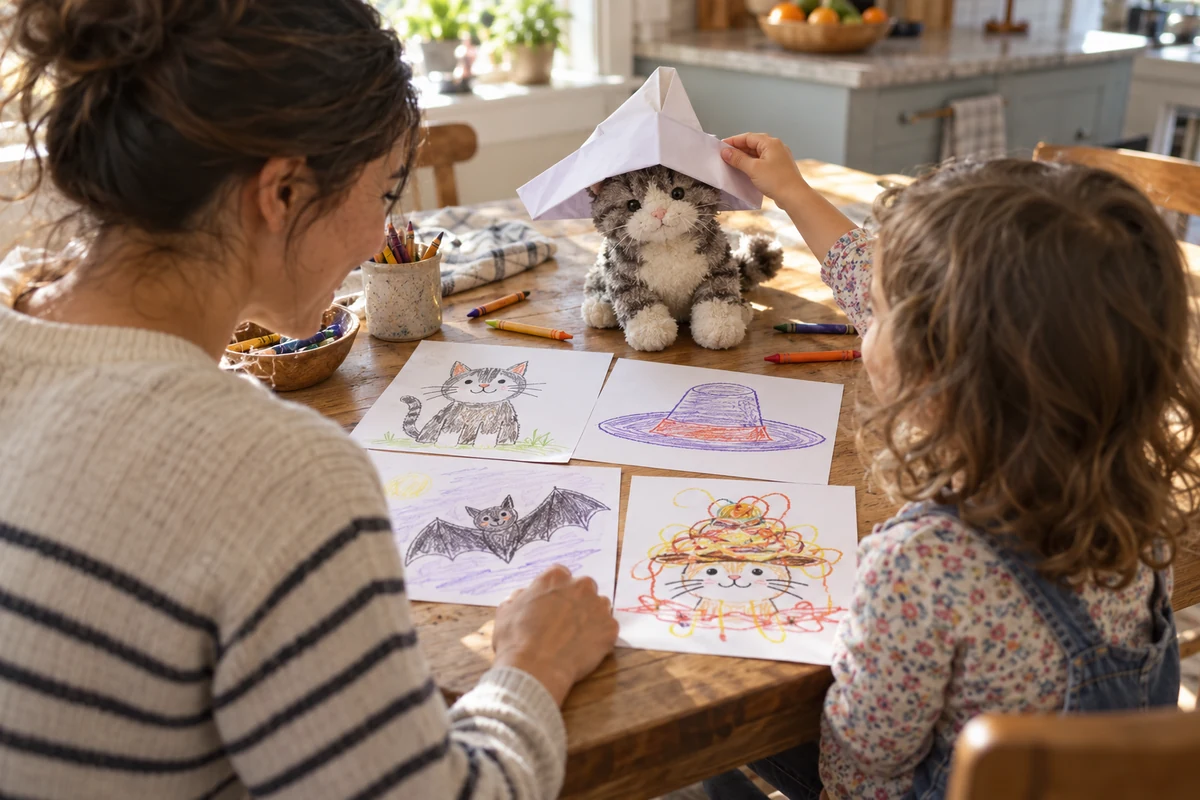
Draw a quick cat face on scrap paper, or simply imagine one. The cat needs a hat, but your house has very peculiar hats. A banana hat? A bathtub hat? A cloud hat that rains on the cat’s whiskers?
Keep returning to the same little line: “A cat in a hat. What kind of hat is that?” You can draw each invention, hold your hands over your head to show its shape, or let a stuffed animal model it.
If your child says the cat wants a bat instead, decide together which sort. A baseball bat can stand beside the cat; a pretend flying bat can perch on the hat. Both cat and bat rhyme, while the picture gives you different jokes.
You can play this without paper or props. One adult saying “a spaghetti hat” and one child pretending to eat it is a complete version. Don’t delay the game while you hunt for a nicer drawing tool.
Game three: Give a character a rhyme name
Try a nickname for a made-up animal: Claire the Bear, Jake the Snake, or Bree the Bee. Then give that character one tiny adventure. Bree the Bee might visit the sea and discover she forgot her swimsuit.
Stick to characters if your child doesn’t enjoy nicknames for people. A rhyme that makes an adult laugh can still bother the person whose name is being changed. If your child says no, retire that name without asking them to find it funny.
Made-up words are welcome. “The goat wore a zroat” gives you a new question to play with: what on earth is a zroat? It could be a coat with pockets for carrots. Call it an invented word so the distinction stays clear, then enjoy the picture.
When to stop the rhyming game
If the game starts to feel like searching for the right answer, offer a rhyme yourself or move on. “I’ve got one: boat and goat” is enough. You don’t have to keep prompting until your child produces a word.
Some days they’ll invent ten nonsense hats. Other days they’ll ask for the next book. Follow that request. The rhyme can travel with you later, perhaps when you’re putting on socks or spotting a boat, without becoming another task to finish after every story.
How Echo Storybooks fits in
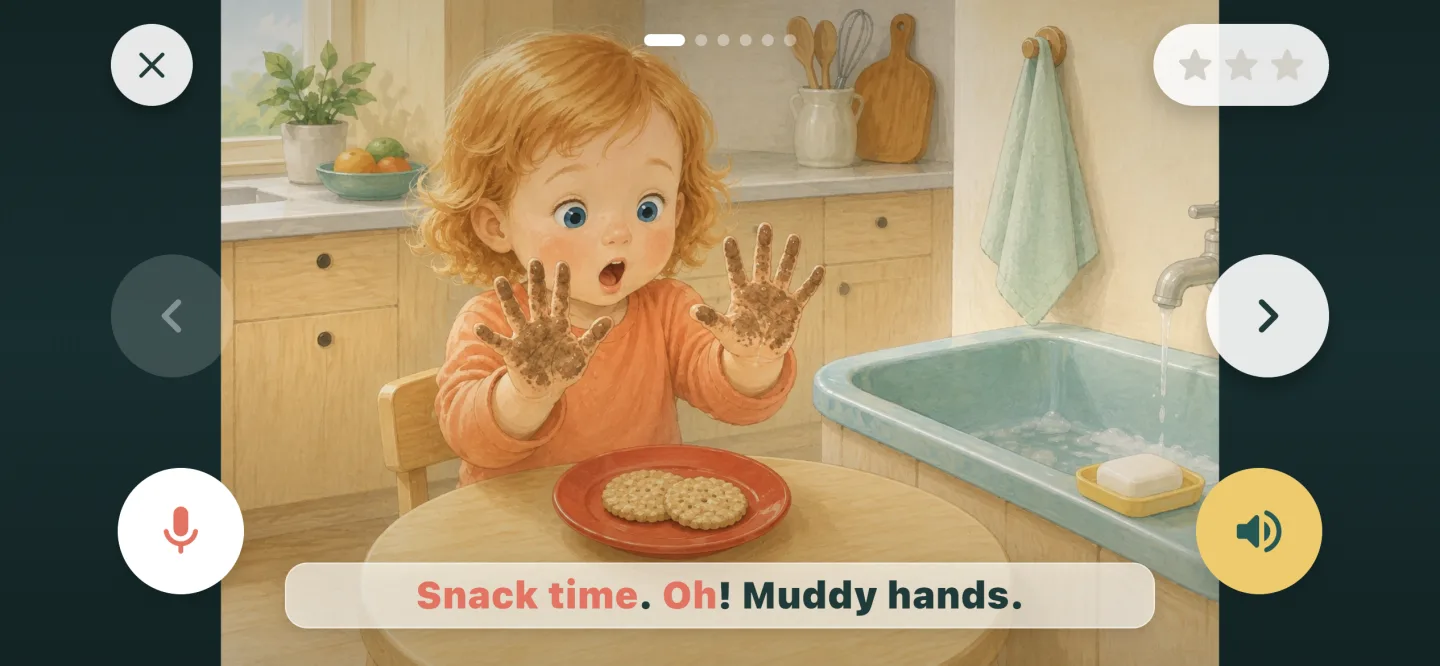
A narrated Echo Storybooks story gives you a few words to borrow for a rhyming game afterward.
Quick questions
What is a rhyme, in words a young child understands?
Rhyming words sound alike at the end: cat and hat, boat and goat, bear and chair.
What if my child makes up words that aren’t real?
Accept them. Made-up words are welcome in a rhyming game, and you can supply all the real rhymes yourself.
When should we stop a rhyming game?
When it starts to feel like searching for the right answer. Offer a rhyme yourself or move on.
Try it with your child
Hear a story, then play with its sounds.
100+ original picture books, no ads. Get started free.