 Echo Storybooks
A guide for families
Keep Reading Aloud After Your Child Starts Reading
Your child can read a book alone now. That does not mean you have to stop doing the voices, sharing the couch, or waiting together to find out what happens next.
Keep reading aloud for as long as you and your child enjoy it. Shared read-alouds and independent reading can have different books and different purposes. Your child does not need to take a turn reading to earn the story.
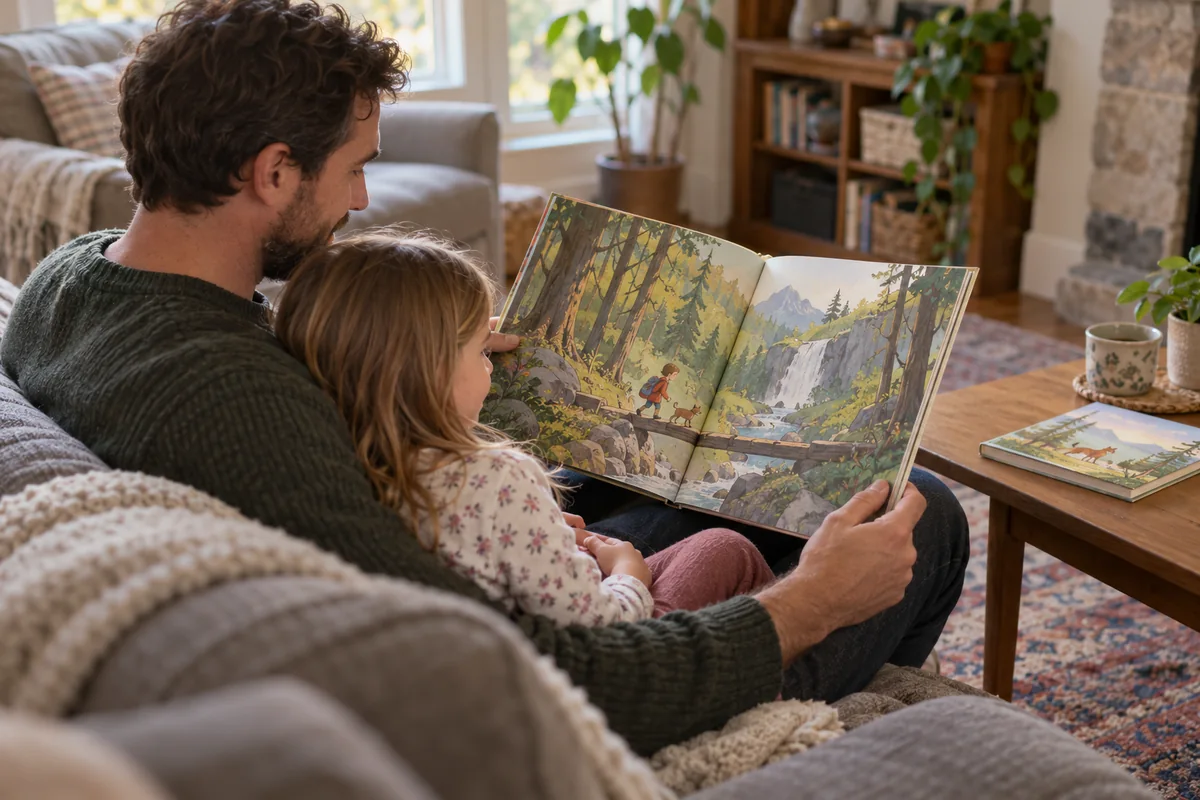
Being able to read does not end together time
The first time your child finishes a book alone may feel like a handoff. You have helped them reach this point; now perhaps the adult reader should step back. But independence does not have to remove an activity both of you like.
Ask about the experience, not just the skill: “Do you still want our evening story?” Maybe the answer is yes. Maybe your child wants you to read while they draw, prefers a funny book at breakfast, or wants to read privately some nights. Let the routine change shape as your child’s preferences change.
Keep two kinds of books within reach
Try a small two-book basket. One book is for your child to pick up independently. The other is a book you share. The shared book might have a longer plot, language you enjoy reading aloud, or a character everyone in the family likes. It can also be a simple favorite. Shared reading does not need to become increasingly difficult.
For example, a child might choose an adventure with several conversations for the shared book. You read the dialogue while they enjoy the action. Their solo choice might be a shorter illustrated story they like returning to. The books are doing different jobs that evening; neither has to prove the other unnecessary.
If required reading starts crowding out your shared story, give the two activities separate slots. You can say, “This is your school practice. Our story after dinner is still our story.” Follow the teacher’s instructions for that practice.
If both books happen to be the same favorite, that is fine too. You can read it together one night and leave it available for solo reading another day.
Offer a turn without handing over the job
Some children want to read a character’s lines. Others want to hear the whole story from you. Offer a specific, easy-to-decline invitation: “Would you like the dragon’s one line, or should I do it?” Accept either answer and move on.
A child can also choose the book, decide where you sit, hold a soft toy, or simply listen. None of those needs to turn into a formal role.
When your child interrupts with an observation, you can enjoy it. When they are quiet, you do not need to fill the quiet with questions. A conversation can happen afterward, or in the middle, or not that night.
If they do choose to read and get stuck, give the help they ask for. You can supply a word and continue, or take over the sentence.
The point of the shared book is that the adult remains available to carry the reading. Your child can join without becoming responsible for keeping the evening moving.
Make room for a routine your child still likes
A regular invitation is easier to keep than an ambitious plan. You might read a chapter after dinner twice a week, share a picture book on Saturday morning, or continue an adventure whenever both of you are home. Choose a time you can actually protect.
Agree on a stopping place before starting a longer book. If your child wants more than the evening allows, mark the next scene and name when you expect to return. There is no need to finish a chapter just because the chapter is there.
Let your child help retire a routine that no longer fits. An older child may prefer you nearby with your own book. You could keep occasional read-alouds for a vacation, a new book, or a younger sibling’s favorite that everyone enjoys. A change in format does not have to be treated as a loss.
Keep one important distinction clear: enjoying adult read-alouds does not tell you whether school reading is easy or difficult. If your child is having trouble with assigned reading, talk with their teacher about that concern directly. Continue the enjoyable shared story while you sort out the separate question.
Your child can have books they manage alone and books they want to hear in your voice. There is room for both in the same family, and often on the same couch.