 Echo Storybooks
A guide for families
Should I Explain Every New Word in a Story?
A new word appears just as the adventure gets good. Should you stop and explain it, or keep going? You can help with the meaning without interrupting every sentence.
The short answer
Explain a word briefly when it blocks the action or your child asks about it. Use familiar language, connect it to something they know, and keep reading. Save a less urgent word for later, and let some words pass on the first read.

Which words to explain, and which to skip
Listen to what the story is doing. If a character needs a lantern to enter a dark tunnel, knowing what a lantern is makes the next action easier to follow. If the sentence says the forest is magnificent, the adventure may make sense even before you discuss that description.
You’re the one reading, so you get to decide. A puzzled look or a “What’s that?” is your cue. So is a scene that only makes sense if your child knows the object.
Try a simple three-way choice:
- Pause now: the word matters to the action, or your child asks what it means.
- Save it: the word is interesting, but a pause would interrupt an exciting scene.
- Let it pass: the story still makes sense, and neither of you wants an explanation right now.
There is no need to mark every word your child might not know. Choose the one that feels useful in the story you are sharing.
How to explain a word in one sentence
In its Reading SOS answer about new words during read-alouds, literacy expert Sandra Wilborn suggests a simple definition, a familiar connection, and later use at home. You can fit the first part into a very brief pause.
For example: “Enormous means very big. An enormous pumpkin would be bigger than this chair.” Then return to the character approaching the pumpkin.
Or: “A lantern is a light you can carry. They’re taking it into the tunnel so they can see.” You can point to the pictured lantern while explaining the object.
Keep the definition appropriate to this particular sentence. A word with several meanings doesn’t need all of them at once. If a boat is drifting, explain its slow movement on the water, not every possible use of the word.
Your child may respond with an example, ask another question, or want the next page. Follow that response. A quick explanation doesn’t need to end with “Now tell me what it means.”
Should you swap hard words for easier ones?
You don’t have to replace every unfamiliar word as you read. You can read the original sentence, add a small explanation, and continue. That lets your child hear how the word belongs in the story.
Sometimes the unfamiliar word is invented. Imagine an original sentence: “The flumper wobbled down the hill.” If the author shows a round purple creature and uses flumper as its name, you can enjoy the odd sound: “A flumper! That’s the name in this pretend story.” There is no dictionary lesson to complete.
If a word feels funny in your mouth, say it again because it is fun. Your child can join or listen. They don’t need to repeat it correctly for the joke to land.
When your child asks about a word you can’t explain, say so. You might look it up together later or check a reliable definition yourself after reading. “I’m not sure. Let’s find out after this page” is more useful than making up an answer.
For a favorite reread, you may choose a different pause. The first time you needed to know what the lantern was. Another time you may both enjoy noticing the tiny light glimmering on the wall. Pause wherever it’s useful that day.
Use the word again later
A word is easier to bring up naturally when something reminds you of it. If you see a very large cardboard box, you might say, “That is enormous, like the pumpkin in our story.” Or a camping lantern in a store might bring the tunnel adventure back to mind.
Keep it conversational. You don’t need flashcards, a list on the refrigerator, or a daily request for a definition. Use the word because it describes something you are both noticing.
A child may start using it, use it differently, or show no interest that day. Any of those is fine. Enjoy the conversation you’re having.
If you use Echo Storybooks, listen together with the words highlighted and explain an unfamiliar word when it matters to the story. You supply the explanation; speaking remains optional. Your child doesn’t have to repeat or define the word to enjoy the story.
For the next read, remember the basic decision: does this word need help now, can it wait, or can it simply belong to the story today? A small, well-timed explanation leaves room for both the new word and the adventure around it.
How Echo Storybooks fits in
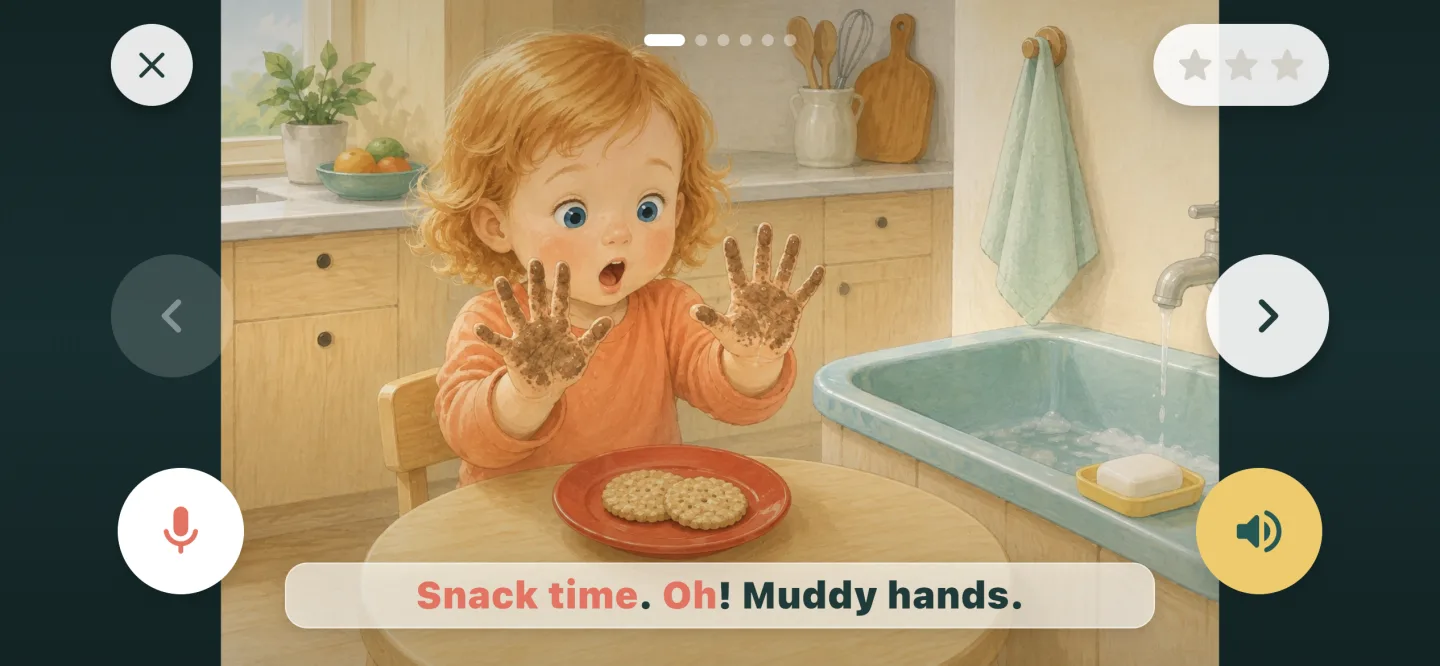
In Echo Storybooks, words light up as each line is read, so it’s easy to point to the one you want to explain.
Quick questions
Should I stop reading to explain every new word?
No. Explain a word briefly when the action depends on it or your child asks. Let the rest pass on the first read.
How do I explain a new word to a young child?
Give a short definition in familiar words and connect it to something they know: “Enormous means very big, bigger than this chair.” Then keep reading.
Should I replace hard words with easier ones?
Usually not. Read the author’s sentence, add a quick explanation, and continue, so your child hears how the word is used.
Try it with your child
Hear the word, see the picture.
100+ original picture books, no ads. Get started free.